
As you scroll on TikTok or Instagram, you may often encounter a video like the one below.
TikTok Video by devinhayes_ - 6/15
What you might not realize at first glance is that the video in question is not an organic piece of content, but rather an ad for the brand BASED Hair Clay.
In recent years, the creator economy has ballooned. In 2023, it represented a total addressable market of $250 billion and by some estimates, it’s expected to reach nearly half a trillion dollars by 2027.1
The creator economy was initially composed primarily of influencer marketing, where influencers who had already built a following were courted for brand deals. This has now been supplemented by the rise of paid user generated content (UGC) creators.2 These UGC creators are typically people who (at least initially) do not have a large following and are paid to manufacture content that appears organic and created by a real user of the product with no affiliation to the brand.
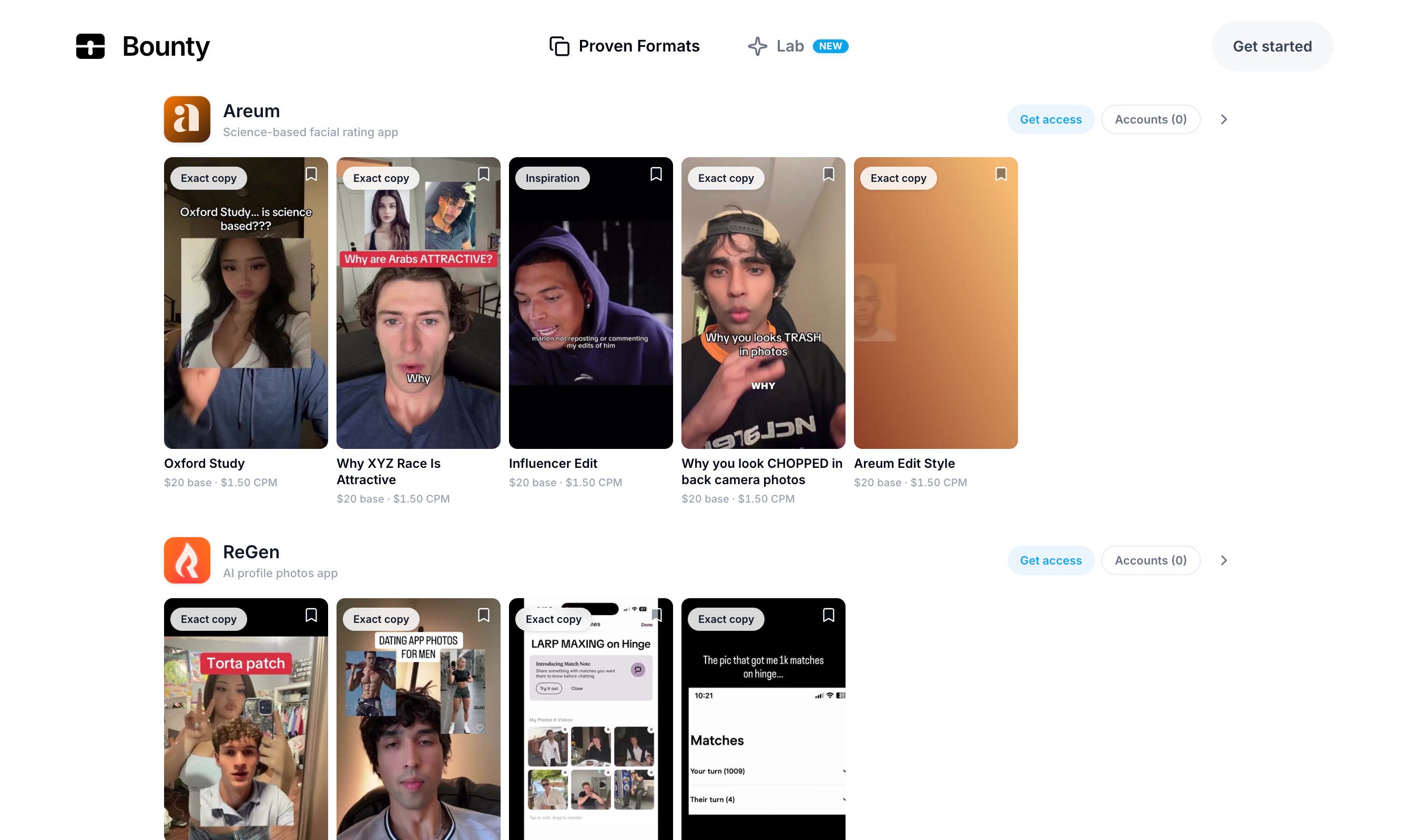
This segment of the creator economy has grown so much that paid UGC has become a full time job for certain content creators with some earning hundreds of thousands of dollars a year. Additionally, UGC marketplaces like Bounty and Methods have popped up, which function as a platform for these creators to find brands to work with, along with pre-packaged scripts for the videos they’re instructed to create.
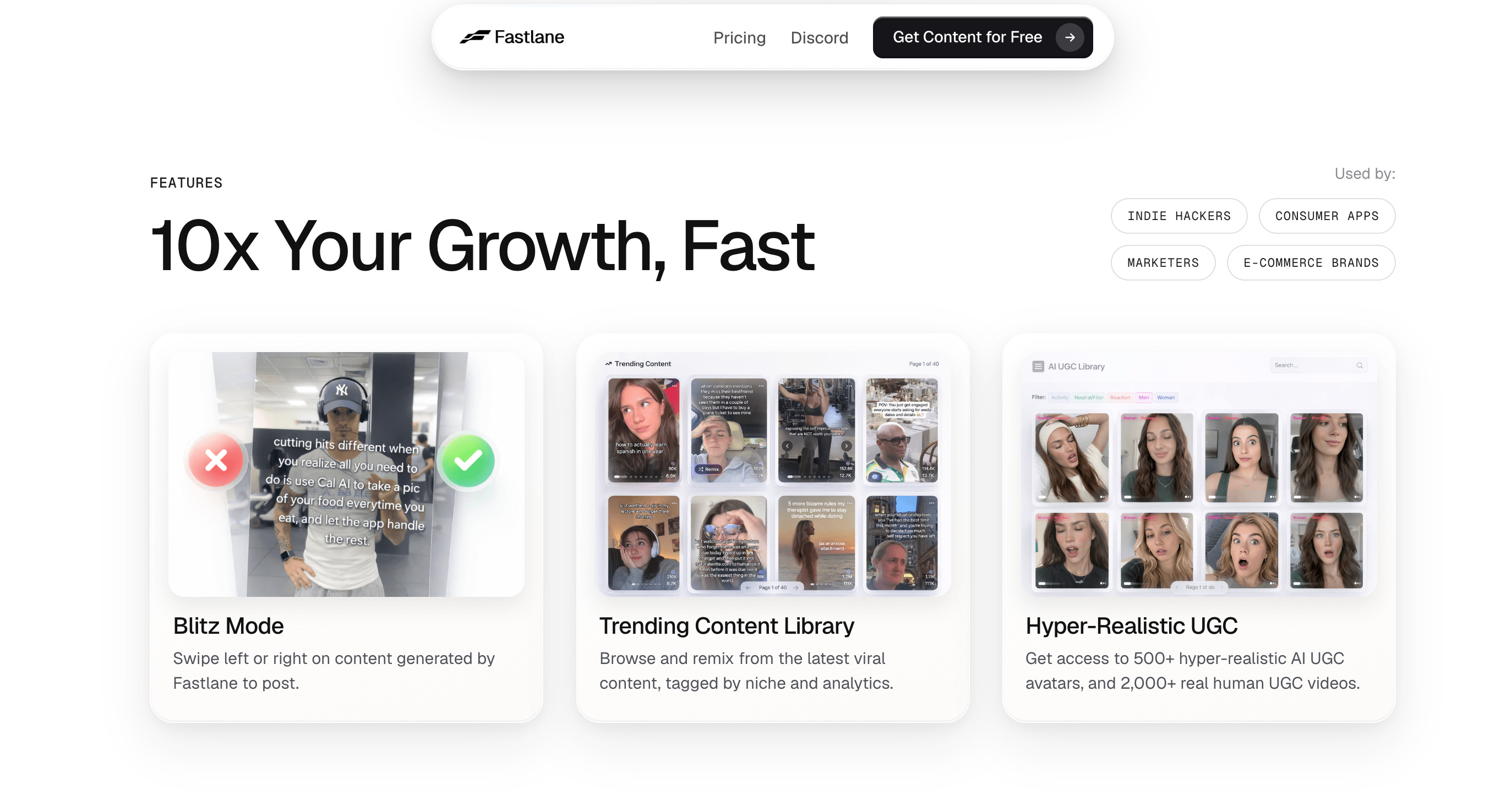
There are even AI UGC ads now with companies like Higgsfield, Fastlane, and MakeUGC providing platforms for brands to track existing trends and use AI-generated creators to promote their brands.
A large percentage of social media ads, including those under the umbrella of traditional influencer marketing, are undisclosed and deceptive. They often do not share anywhere that the video is an ad or that there is a material connection between the creator and the brand. Additionally, many of these UGC videos are deceptive in ways that go beyond simply being undisclosed. For example, they may imply that the creator is a frequent user of the product or has received benefits from using the product (monetary or otherwise), when neither are true.

The incentive here is clear: at least in the short term, undisclosed ads garner more engagement than disclosed ones.3
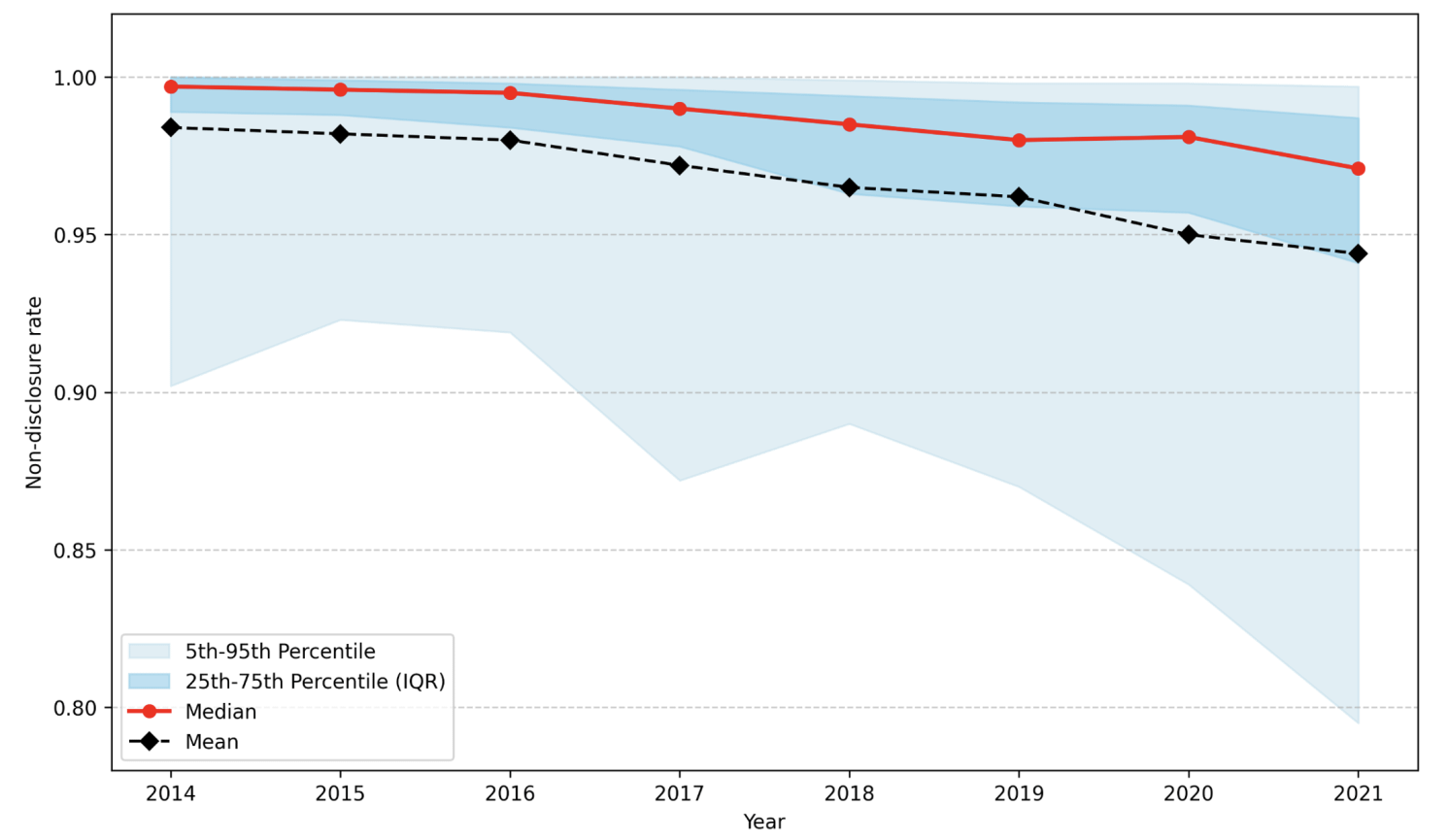
And the problem is incredibly widespread. In an analysis of over 100 million X (formerly known as Twitter) posts from 2014 to 2021, researchers found that 96% of sponsored content was undisclosed and that even a lower-bound classification still had an undisclosed share of 82%.4 Additionally, a sweep by the EU of influencers’ social media posts across major platforms in 2024 found that while nearly all influencers posted some commercial content, only 20% systematically disclosed these posts as ads.5
Beyond these studies and sweeps, multiple notable brands have faced lawsuits like Polymarket in NACA v. Polymarket, which alleges that the company’s social media marketing violates DC consumer protection laws.6 And its rival Kalshi was recently referred to regulatory authorities by the BBB’s National Programs’ National Advertising Division for failure to participate in an inquiry into whether it sufficiently disclosed material connections in its social media advertising.7
Because of how ubiquitous this practice is, one might assume that undisclosed advertising is legally permissible. However, the truth is that it unambiguously violates the FTC Act, as the agency has reiterated multiple times in the past.8 The FTC released a revised version of its Endorsement Guides in 2023 and clarified both that 1. “An endorsement must reflect the honest opinion of the endorser and can’t be used to make a claim the marketer of the product couldn’t legally make” and 2. “[I]f there’s a connection between an endorser and the marketer that a significant minority of consumers wouldn’t expect and it would affect how they evaluate the endorsement, that connection should be disclosed clearly and conspicuously.”9
In the case of AI UGC or when an endorser is making a claim not based on their own experience, disclosure must go one step further. In addition to disclosing that a post is an ad, it must also be made clear that the individual in the post is AI-generated or a paid actor.10
Furthermore, the Guides are clear that advertisers, endorsers (in this case influencers and paid UGC creators), and ad agencies or other similar intermediaries can all be liable for non-disclosure of material connections and deceptive statements.11 The Guides also state that advertisers should provide guidance to endorsers on disclosure and making truthful statements, monitor endorsers’ compliance, and take sufficient action to remedy non-compliance, as well as prevent future non-compliance.12
Unfortunately, it’s apparent that a large number of brands and creators are not complying, and even worse, are openly flouting the law.
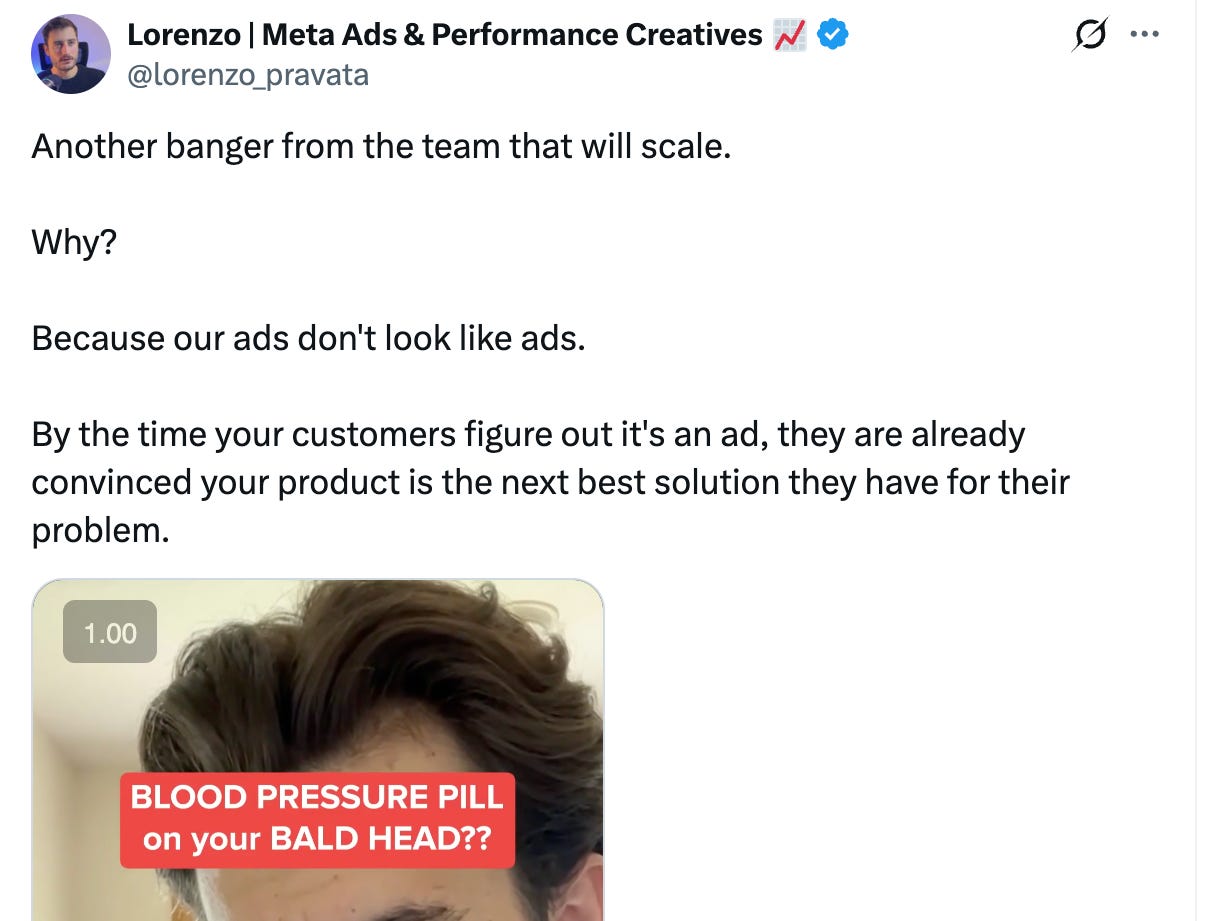
It can be easy to dismiss the impact of these ads as mere annoyances. But deceptive advertising is not a victimless crime. It manipulates consumers into making decisions they otherwise would not have made and gives cultural capital to unsavory companies and brands. It’s hard to quantify the harm caused by a specific undisclosed or deceptive ad, but it’s worth asking ourselves, “How many young men became addicted to gambling and prediction markets because of a deluge of hidden Stake, Kalshi, and Polymarket ads in the content they consumed? How many people have lost their life savings from a crypto rug pull promoted without disclosure by an influencer they trusted? And how much health and nutrition misinformation survives and gets repeated because of the financial incentives to do so?”
I worry the answer is even larger than we might think.
In the long run, consumers are not the only ones harmed. Influencers, social media platforms, and the industry at large will suffer from the erosion of trust.13 Real testimonials will get crowded out, users will begin avoiding these platforms entirely due to the constant flood of commercial content, and brands will lose valuable channels to reach consumers.
If this trend of increasing volumes of deceptive advertising is to be reversed and if American consumers are to truly be protected, rigorous enforcement must happen and it must happen now.
“The Creator Economy Could Approach Half-a-Trillion Dollars by 2027,” Goldman Sachs, April 19, 2023, https://www.goldmansachs.com/insights/articles/the-creator-economy-could-approach-half-a-trillion-dollars-by-2027
Influencer Marketing Hub, “Influencer Marketing Benchmark Report 2026,” last modified May 4, 2026, https://influencermarketinghub.com/influencer-marketing-benchmark-report/#toc-8.
Adrian Waltenrath, “Consumers’ Ambiguous Perceptions of Advertising Disclosures in Influencer Marketing: Disentangling the Effects on Current and Future Social Media Engagement,” Electronic Markets 34, no. 1 (2024): article 8, https://doi.org/10.1007/s12525-023-00679-8.
Daniel Ershov, Yanting He, and Stephan Seiler, “Frontiers: How Much Influencer Marketing Is Undisclosed? Evidence from Twitter,” Marketing Science 44, no. 3 (2025): 505–515, https://doi.org/10.1287/mksc.2024.0838.
European Commission, “Investigation of the Commission and Consumer Authorities Finds That Online Influencers Rarely Disclose Commercial Content,” press release IP/24/708, February 14, 2024, https://ec.europa.eu/commission/presscorner/detail/en/ip_24_708.
Gonzalo E. Mon, “All Bets Are Off as Polymarket Faces Lawsuit over Influencer Campaigns,” Ad Law Access (blog), Kelley Drye & Warren LLP, June 28, 2026, https://www.kelleydrye.com/viewpoints/blogs/ad-law-access/all-bets-are-off-as-polymarket-faces-lawsuit-over-influencer-campaigns.
BBB National Programs, National Advertising Division, “National Advertising Division Will Refer Kalshi to Regulatory Authorities for Failure to Participate in Inquiry,” NAD Case #7573, June 8, 2026, https://bbbprograms.org/media/newsroom/decisions/kalshi.
Federal Trade Commission, “FTC’s Endorsement Guides: What People Are Asking,” June 2023, https://www.ftc.gov/business-guidance/resources/ftcs-endorsement-guides-what-people-are-asking.
Federal Trade Commission, "FTC's Endorsement Guides."
Federal Trade Commission, “FTC’s Endorsement Guides.”
Guides Concerning the Use of Endorsements and Testimonials in Advertising, 16 C.F.R. § 255 (2023), https://www.ecfr.gov/current/title-16/chapter-I/subchapter-B/part-255.
16 C.F.R. § 255.5.
Waltenrath, “Consumers’ Ambiguous Perceptions.”
once i get hit with one, i find myself scrolling based off the assessment if reels are an ad or not and it sucks !!!
This has happened to me so often!! Where I realize a little too late that a reel I'm watching is actually an ad, and I hate it